Reflection · 振り返り · By Aya Toriyama · 16 March 2026
Both sides were waiting for the other to act.
The start of Ochakai was quite spontaneous. I was living in a building in The Hague and I noticed a miscommunication among residents. I was part of it myself. At the same time I was involved in a project through The Ideal School Project where I was thinking about what was happening around me, what concerned me, and what I felt I could actually do something about. The building felt like the obvious place to start.
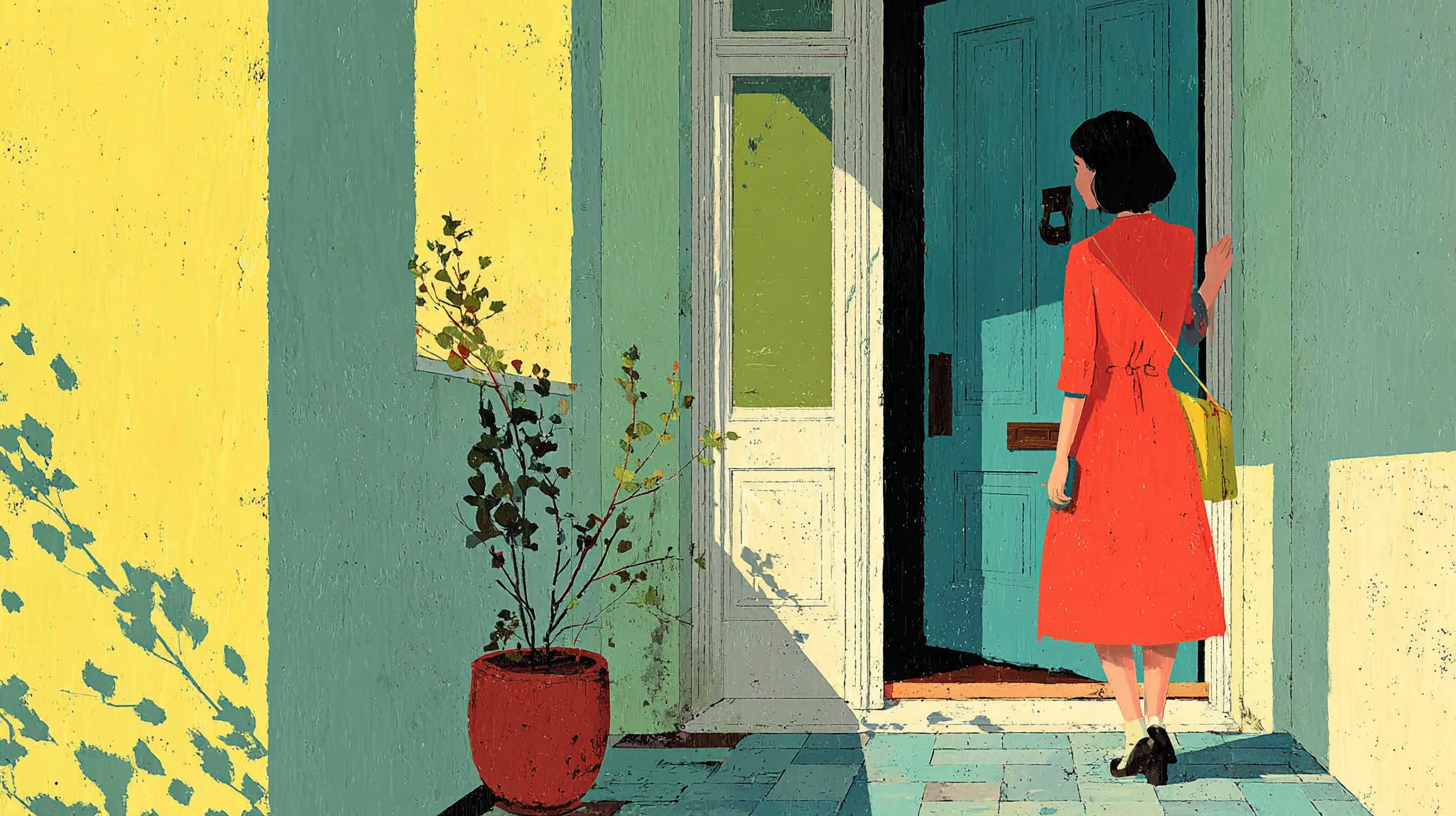
I was scared. My Dutch was not strong at the time, and I knew that the people I most needed to speak to were comfortable only in Dutch. I had to try anyway. Having the backing of the project gave me enough confidence to knock on a neighbour's door and start a conversation.
What happened surprised me. The neighbour invited me in for drinks and cookies.
That moment stayed with me. Because I had been nervous for weeks about making that first move, imagining resistance or indifference. And instead there was warmth, almost immediately. I started to wonder how long that warmth had been sitting there, waiting.
I kept meeting with that neighbour. And slowly, something started to shift in the building.
The building had its own complexity. There were residents who had lived there for decades and newer arrivals, many from different backgrounds, who did not really know each other. In that unfamiliarity, tension had room to grow. When something went wrong, it was usually the newcomers who were blamed, without much evidence. Nobody was necessarily acting in bad faith. They just did not know each other well enough to assume good faith either.
I did not try to address that tension directly. I am not sure that would have worked. Instead I tried to create small reasons for people to share a space. A WhatsApp group so neighbours could communicate. A picnic in the backyard that had always been there but was rarely used. A poster in the elevator. A walk through the neighbourhood. A Japanese tea session, organised with Wijkz, that opened beyond the building to the wider neighbourhood.
None of these things were complicated. What they had in common was that someone had to go first.
A channel built for connection among residents had become a point of contact between the building and organisations outside it. When the police needed to reach witnesses after an incident in a neighbouring building, they used it. Something built for neighbours to talk to each other ended up making the building more reachable to the people and institutions around it.
I was involved for a few months and then stepped back.
A year later, the gatherings are still going. An elderly resident from the building began organising them herself, following the same format. Nobody asked her to do this. She just had the conditions and the confidence and she continued.
That is the thing I keep thinking about. Both sides were waiting for the other to act. The connection is not missing. The first move is missing.
I started Ochakai hoping to make that first move a little easier. Not by making people more open or more neighbourly, but by changing the conditions just enough that acting first feels less frightening than it did for me, standing outside that door with imperfect Dutch, wondering whether to knock.
It turns out the neighbour was hoping someone would.
This piece originally appeared on LinkedIn . Aya Toriyama is the founder of Ochakai, a practice helping housing organisations build community in their buildings. More about Aya →